This post continues surveying the witnesses to the text of the Old Testament. This post focuses on the early translation of the Hebrew Bible.
This is the fourth in a series of posts on the textual criticism of the Hebrew Bible/Old Testament. Other posts include:
All posts in this series may be viewed here.
Early Versions of the Hebrew Bible
Before the discovery of the Dead Sea Scrolls (DSS), the ancient Versions — early translations of the Hebrew text into different languages — were the primary sources for alternative readings when evaluating the Hebrew Masoretic text. In the light of the DSS, however, aside from the Greek translation, most of the Versions are now of lesser importance. Text critics, nevertheless, still compare variants in at least three early versions in addition to the Greek Septuagint: the Aramaic Targums, the Syriac Peshitta, and the Latin Vulgate. These three normally agree with the MT, though their few differences can be important. Tov notes: “Although there are thousands of differences between MT and the translations, only a fraction of them was created by a divergence between MT and the Vorlage of the translation. Most of the differences were created by other factors that are not related to the Hebrew Vorlage” (Tov, Textual Criticism, 123).
1. The Greek Septuagint
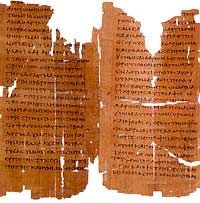 The Septuagint (LXX) is the ancient Greek translation of the Hebrew Scriptures. While its true origins are cloaked with mystery, the pseudepigraphal Letter of Aristeas states that 72 Palestinian Jews translated the Pentateuch in 72 days in Alexandria, Egypt, around 285 BCE. As the story of the origin of the LXX was retold in the Church it became yet more exaggerated. According to Justin Martyr, the tradition included the whole OT. Later in the second century Irenaeus reports that the translators worked in isolation but came up with identical results. Finally, Epiphanius of Salamis pushed the isolation idea to the limit. He had the translators do everything in pairs. When the thirty-six translations were read before the king they were found to be completely identical! The name “Septuagint” (“seventy”) derives from this legend, though it appears the number 72 was rounded to 70.
Despite its legendary character, Aristeas is nonetheless accurate insofar as it places the translation of the Pentateuch in the first half of the third century BCE; it associates the version with the Jewish community in Alexandria; and it states that the Pentateuch was translated first. In regards to its Egyptian origins, I should note that there are some minority views that argue for a Palestinian origin of some books of the LXX.
For a thorough treatment of the Letter of Aristeas, see The Legend of the Septuagint: From Classical Antiquity to Today, Abraham Wasserstein and David J. Wasserstein (Cambridge: Cambridge University Press, 2006; Buy from Amazon.ca | Buy from Amazon.com).
The LXX is not a uniform translation. Various translators at different times, with varying philosophies of translation and different language capability, translated different portions of the Hebrew Bible. For example, the translation of the Torah is a good formal translation, the translation of the Psalter is very formal, while the translations of Proverbs and Isaiah are less so. Nevertheless, outside of the MT, the LXX is the most important tool for textual criticism because of its antiquity, its independence from the MT, and its completeness. As I noted in a previous post, some Qumran manuscripts attest to this text type.
The name Septuaginta today includes all textual witnesses to the Greek text, including the later revisions of the original Greek translation. For this reason, scholars distinguish between the Old Greek (OG; i.e., the original translation) and the Septuagint (as represented in the extant Greek manuscripts).
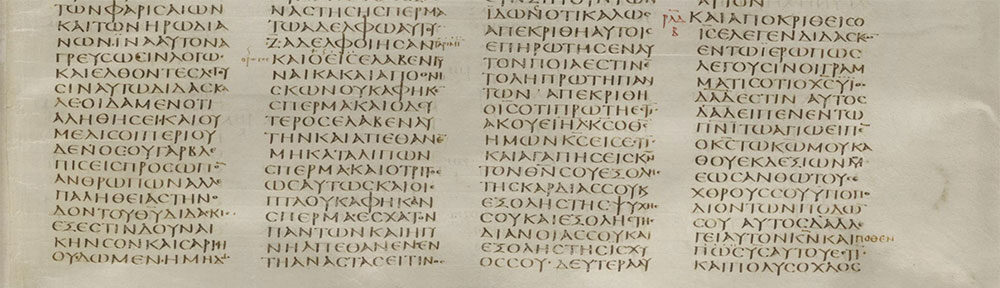
Manuscripts of the LXX. Septuagint manuscripts are customarily classified into three groups: papyri, uncial codices, and miniscules/cursives. There are nearly 700 papyri dating to the seventh century and earlier, the most important of which include the Chester Beatty Papyri, which date from the second to fourth centuries CE. Uncials (i.e., manuscripts written in all capital letters) come from the fourth to the tenth centuries, the most important of which include the fourth century Codex Vaticanus (B), the fourth century Codex Sinaiticus (×?), and the fifth century Alexandrinus (A). There are over 1500 miniscules (i.e., manuscripts written in lowercase) which date from the ninth century and later; they are nevertheless important as they often represent copies of very old manuscripts. For example, while the manuscripts referred to with the sigla “boc2e2” come from the tenth to fourteenth centuries CE, they are our only witnesses to the fourth century Lucianic recension for Samuel and Kings. (Until the eighth century, only uncials were produced, in the ninth and tenth centuries uncials and miniscules were used side by side, and from the eleventh century only miniscules were produced; it is also important to note that until the eighth century, texts were written with their letters in continuous sequence, without word division, accents, breathings, or punctuation.)
During the 500 years or more that separate the hypothetical OG text from these manuscripts, the LXX was corrected to the proto-MT, modified by other texts, influenced by scribal idiosyncrasies, and even underwent several revisions. Therefore, before the Septuagint can be a useful tool in textual criticism, the OG text must first be reconstructed.
The Development of the LXX. There is some debate as to how the Septuagint developed. Paul de Lagarde proposed that there was one original text from which other recensions (a deliberately produced family of manuscripts exhibiting a distinct text type) and that to restore the OG the critic must first classify the variants into several recensions. Basing himself on Jerome, he proposed essentially the following model:
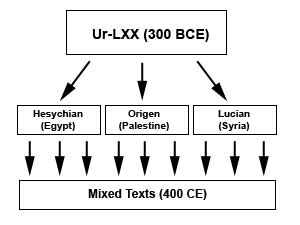
According to this model, by classifying the variants according to their recensions, one can reconstruct for the OG an eclectic text. While much of Lagarde’s orginal theory has been discarded (e.g., the Hesychian recension can’t be recovered), the vast majority of Septuagint scholars continue to hold to his basic notion of an original “Ur-text.” The Göttingen Septuagint series, named Septuaginta, Vetus Testamentum Graecum Auctoritate Societatis Litterarum Gottingensis editum, essentially follows this model and method. An abridged version of this eclectic reconstruction was published by A. Rahlfs, Septuagint, id est Vetus Testamentum graece iuxta LXX interpretes (Stuttgart, 1935; Buy from Amazon.ca | Buy from Amazon.com).
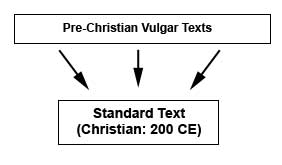
Paul Kahle, in contrast, took his cues from the witness of the Targums and theorized that there never was an “original” OG text. According to him, the Christians in the second century CE standardized numerous earlier, “vulgar” (i.e., texts to facilitate reading) translations, originally independent of each other. According to this view, one ought not attempt to reconstruct the OG, for such a text never existed. His model may be represented as:
The diplomatic edition of A. E. Brooke, N. McLean, and H.St.J. Thackeray, The Old Testament in Greek According to the Text of Codex Vaticanus (Cambridge 1906-1940) essentially follows this model in that it doesn’t attempt to construct the OG. They chose Codex Vaticanus (B) as their base text, and where it is lacking, they supplement it from Codex Sinaiticus (×?) and Codex Alexandrinus (A).
For a full listing of texts and translations of the LXX, including a complete listing of critical and popular editions, see my Annotated Guide to the Septuagint Pages.
The Character of the LXX. As noted above, each individual book of the LXX has its own idiosyncrasies to its translation and thus a careful examination of its translation technique is necessary before one can retrovert the text with any confidence. In addition, in some portions of the OT, the LXX is significantly different from the MT. For example, in Jeremiah it exhibits a different sequence of chapters and is one-sixth shorter than the MT. Consider this example from Jeremiah 28 (= Jeremiah 35 in the LXX). The additions in the MT are noted with italics, while additions in the LXX are marked bold.
And it came to pass in that year, in the beginning of the reign of Zedekiah king of Judah, in the fourth year, in the fifth month, Hananiah son of Azzur the false prophet, who was from Gibeon, said to me…: “This is what the LORD Almighty, the God of Israel, said to me: ‘… Within two years I will bring back to this place all the articles of the house of the LORD that Nebuchadnezzar king of Babylon removed from this place and took to Babylon, and Jeconiah son of Jehoiakim king of Judah and all the exiles from Judah who went to Babylon I am going to bring back to this place, ‘declares the LORD ‘” (Jer 28:1-4a; LXX 35:1-4a).
Throughout Jeremiah the MT consistently presents a more expanded version than the LXX. Aside from the Pentateuch, the same is true of other passages such as 1 Samuel 18-21 and Ezekiel. The LXX, in addition to other large-scale differences, also presents an entirely different text in the books of Daniel and Esther. These differences raise serious questions about the nature of the original text and the goal of textual criticism, to which I will return in a future post.
Revisions of the LXX. Some scribes deliberately revised the OG to agree more with the developing proto-MT. Prior to Origen (200 CE), who brought this process to completion in his famous Hexapla, revisers well-known to history were Aquila (125 CE), Symmachus (170 CE), and Theodotion (180 CE). To these Dominique Barthélemy recently posited a fourth from a Greek scroll of the Minor Prophets (middle of the first century BCE). Barthelemy named it Kaige because of its distinctive translation of Hebrew ×’Ö·×? (gam). Later research showed that the translational units in the Septuagint which are ascribed to Theodotion probably belong to this revision, and so many scholars now refer to it as Kaige-Theodotion. This recension became the text of the LXX in certain sections of the historical books and Daniel.
Lucian (312 CE) revised the text once again, this time in agreement with reading of some texts known from Qumran. Some scholars think that this is the OG itself, while others think it is close to it. Needless to say, it is an important witness to the OG.
The LXX is one of the most significant witnesses to the early text of the Hebrew Bible. If used judiciously, it can be one of the earliest witness that we have available to us. In addition, since every translation is also an interpretation, the LXX also provides a window to view the interpretation of the Hebrew Bible in Hellenistic Judaism.
For more information about the LXX, including introductions and tools, see my Septuagint Pages.
2. The Aramaic Targums
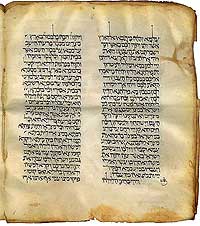 “Targum” (Tg.) refers to an early Jewish translation of the Bible into Aramaic. In Second Temple Judaism Hebrew ceased to be spoken as the common language and was replaced by Aramaic, the official written language of the western Persian empire. As the knowledge of Hebrew decreased among the Jewish people, Targums were originally created orally, presumably to preserve its distinction from the truly sacred text which was in Hebrew. Only later were they committed to writing.
The targum fragments found at Qumran show that both free and literal Targums were made. Later these became standardized according to the proto-MT. The various targums include the Palestinian Targum, which does not have a single authoritative form, and those which were revised in Babylon. The best known Targum of the Torah is Targum Onqelos (see image). While scholars are divided about its date (first, third, or fifth century CE) and place of origin (Babylon or Palestine), its influence is unmatched among the Targums; it became official in the fifth century CE after a long history of development (It is also one of the more formal Targum translations). There are also Palestinian Targums of the Torah. The most important Targum to the prophets is the Targum Jonathan. Like the LXX, the Targums are not the work of single individuals.
In general the Targums are probably of more value for the history of exegesis and for the background of the NT than they are for text critical study.
The targums are being translated into English in the series, The Aramaic Bible: The Targums, with Martin McNamara serving as the project director (Liturgical Press, 1987-). An older translation is available from A. Sperber, The Bible In Aramaic: Based on Old Manuscripts and Printed Texts (Brill, reprint 2004; Buy from Amazon.ca | Buy from Amazon.com).
3. The Syriac Peshitta
The term “Peshitta” means “the simple [translation],” and refers to the Syriac Bible (Syr.). Its Hebrew source is close to the MT, though it shows agreement and disagreement with the above versions, depending in part upon the book. It is not clear whether it was translated by Christians or Jews, though it may be the case that it had Jewish origins and then was later adopted and transformed by Christians.
For a modern translation, though not precise, see George Mamishisho Lamsa, The Holy Bible from Ancient Eastern Manuscripts: Containing the Old and New Testaments Translated from the Peshitta, The Authorized Bible of the Church of the East (HarperCollins, 1990; Buy from Amazon.ca | Buy from Amazon.com). A critical edition is being prepared by the Peshitta Institute of the University of Leiden called The Old Testament in Syriac according to the Peshitta Version (Leiden, 1966-).
4. The Latin Vulgate.
 Recognizing the need for a uniform and reliable Latin Bible, Pope Damascus commissioned Jerome (Hieronymous) to produce such a work (345-420 CE). Jerome’s original translation of the Psalms (Psalterium Romanum) was a revision of the Vetus Latina, old Latin texts based largely on the LXX. Jerome’s second translation of the Psalms was based on the Hexapla (Psalterium Gallicanum). Dissatisfied with using other translations, Jerome prepared a fresh translation form the “original truth of the Hebrew text” with the help of Jewish scholars. The Vulgate, “the common one” (Vg), translation essentially agrees with the proto-MT. Editions of the Vulgate, however, include, besides the Gallican Psalter, other books based on the Hexapla: Proverbs, Ecclesiastes, and Song of Songs.
There are two critical editions of the Vulgate available: Biblia Sacra iuxta latinam Vulgatam versionem (Rome, 1926-) and the editio minor of R. Weber, Biblia Sacra Vulgata (4th ed.; Stuttgart, 1990; Buy from Amazon.ca | Buy from Amazon.com).
Employing the Versions in Textual Criticsm
Employing the Versions in textual criticism of the Hebrew Bible is a daunting task. Not only do you need to retrovert the translated text, you also need to deal with major uncertainties regarding the origin and development of the Versions themselves — especially considering that many of them are not available in critical editions. In my mind the LXX is the most useful to the text critic, while the other versions are more important for their insight into the interpretation of the biblical text.
 I just noticed that by blog counter hit the 60,000 mark. I just want to say, “Thank you for visiting!” I added the counter on July 7th last year, so it has been just over one year. I am a bit humbled that 60,000 people have visited my blog (and that says nothing about my companion Codex website).
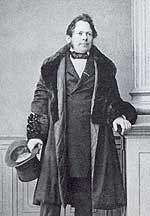 The story of the discovery of the codex is full of intrigue and scandal — OK, so it isn’t Indiana Jones, but for biblical studies it is pretty exciting! In search for ancient manuscripts of the Bible, Tischendorf first visited the monastery of St. Catherine in 1844. While visiting with one of the monks there he noticed a large basket of parchments being used to kindle the fire. Recognizing the parchments as parts of the OT in Greek, he persuaded the monks of their value and they stopped using them as a heat source. After some negotiations he was allowed to remove 43 leaves (which he figured was about one third of what was in the basket). Tischendorf eventually presented these manuscrpts to Frederick Augustus II, King of Saxony, who was his patron at that time. The 43 leaves were deposited in the university library at Leipzip and published under the name of Codex Friderico-Augustanus (MS gr. 1) in 1846.
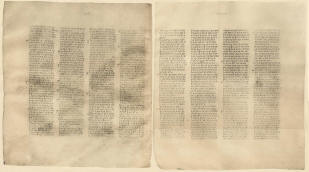 The codex is made of fine vellum (sheepskin and goatskin) with pages measuring ca. 15 by 13.5 inches (the original size is unknown due to binding). It has four columns per page (two columns in the OT poetic and wisdom books) with 48 lines per column. As with uncial manuscripts, there are no spaces between words, accents, or breathing marks.
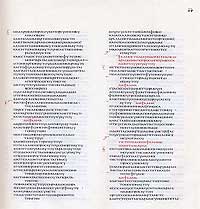 Its date and provenance of the codex are uncertain. Based on the Eusebian apparatus, a clear terminus post quem can be set for around 300-340 CE. While a terminus ante quem is more difficult to ascertain, paleographically it has been set by a majority of scholars to the mid-fourth century CE based on a comparison with other uncial manuscripts, among other things (one scholar argues for a fifth century date, though with little support). The first two correctors are typically dated contemporaneous with the codex, while the other correctors are typically dated somewhere between the fifth and seventh centuries, and the last two to medieval times. While three different locations have been posited for its origin (Rome, Alexandria, and Caesarea); most scholars seem to prefer Alexandria or Caesarea.