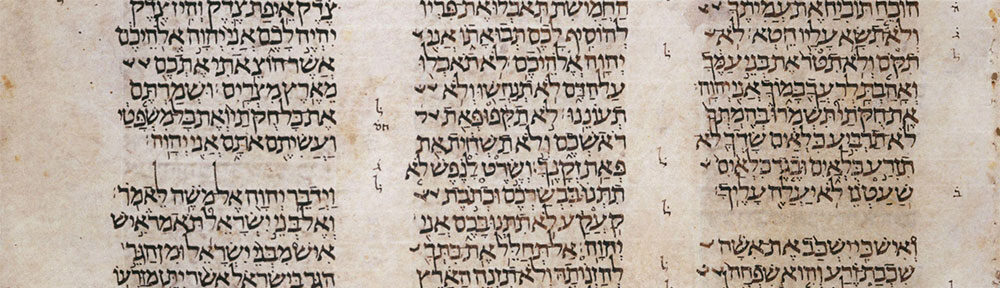
There are a number of excellent resources for the study of the book of Jonah. While this post is by no means exhastive, I have tried to highlight the primary resources. Feel free to add your own opinions in the comments.
Hebrew Helps
For those just learning Hebrew, there are a number of aids to help you work through the Hebrew text of the book of Jonah (For more general Hebrew aids, please see my “Mastering Biblical Hebrew” pages). There are three resources that facilitate the rapid reading of biblical texts (I have included links to PDF excerpts with the book of Jonah as examples).
- , A Reader’s Hebrew-English Lexicon of the Old Testament. Complete in One Volume (Zondervan, 1989). Buy from Amazon.ca | Buy from Amazon.com [PDF]
- , Old Testament Parsing Guide: Revised and Updated Edition (2 vols.; Broadman & Holman Publishers, 2000). Buy from Amazon.ca | Buy from Amazon.com [PDF]
- , Analytical Key to the Old Testament (4 vols.; Baker, 1989-1990). Buy from Amazon.ca | Buy from Amazon.com [PDF]
The Old Testament Parsing Guide parses and provides an English gloss for every verb in order of their occurrence in the biblical text, while A Reader’s Hebrew-English Lexicon of the Old Testament provides an English gloss (from BDB) for words that occur less than fifty times in sequence of chapter and verse. The most comprehensive work of this kind is the Analytical Key to the Old Testament. This four volume work parses, translates, and provides a cross-reference to BDB for all forms (verbs, nouns, particles, etc.) as they occur in the biblical text.
Another handy aid for translating the book of Jonah is
- , A Handbook on the Books of Obadiah, Jonah, and Micah (UBS Helps for Translators; United Bible Societies, 1993). Buy from Amazon.ca | Buy from Amazon.com
Commentaries
 There are many excellent commentaries on the book of Jonah. These are written from a variety of different theological and ideological perspectives for audiences of different levels (for a discussion of the theological perspective and intended audience of some of the main series, see here).
 The critical commentaries by Limburg, Sasson, and Simon, and Wolff all have their strengths, though if you had to only choose one I would highly recommend Sasson. I have worked through Sasson again and have come to appreciate his careful eye for detail as well as his sober exegetical judgment. In addition, his commentary is a wealth of information of how Jonah “Big Fish” story grew with its retelling. Limburg is good, albeit brief.
There are a number of good comentaries that are based on sound scholarship yet offer theological depth and insight. These would include , Allen, Bruckner, Roop, Stuart, and Trible. My pick for top pastoral commentary, however, is Allen’s work in NICOT, primarily for his balancing of scholarship and theological reflection. In this regard, Trible is a close runner-up. Good commentaries for a popular audience include Bruckner, Baker et al, and Nixon.
- Minor Prophets I: Hosea, Joel, Amos, Obadiah, Jonah, and Micah. New International Biblical Commentary: Old Testament. Hendrickson, 1996. Buy from Amazon.ca – Buy from Amazon.com
- The Books of Joel, Obadiah, Jonah, and Micah. New International Commentary on the Old Testament. Eerdmans, 1976. Buy from Amazon.ca – Buy from Amazon.com
- Obadiah, Jonah and Micah. Tyndale Old Testament Commentaries. InterVarsity, 1988. Buy from Amazon.ca – Buy from Amazon.com
- Jonah, Nahum, Habakkuk, Zephaniah. NIV Applicaton Bible Commentary. Zondervan, 2004. Buy from Amazon.ca – Buy from Amazon.com
- Twelve Prophets, Volume 1: Hosea, Joel, Amos,
Obadiah, Jonah. Daily Study Bible. Westminster Press, 1984. Buy from Amazon.ca – Buy from Amazon.com - The Message of Jonah. A Theological Commentary. Wipf & Stock, 2000. Buy from Amazon.ca – Buy from Amazon.com
- Revelation of God: A Commentary on the Books of the Song of Songs and Jonah . International Theological Commentary. Eerdmans, 1988. Buy from Amazon.ca – Buy from Amazon.com
- Jonah: A Commentary. Old Testament Library. WJK, 1993. Buy from Amazon.ca – Buy from Amazon.com
- Hosea-Micah. Interpretation. John Knox Press, 1988. Buy from Amazon.ca – Buy from Amazon.com
- The Minor Prophets: An Exegetical and Expository Commentary. Volume 2: Obadiah, Jonah,
Micah, Nahum, and Habakkuk. Baker, 1993. Buy from Amazon.ca – Buy from Amazon.com - Haggai, Zechariah, Malachi, Jonah. International Critical Commentary. T & T Clark, 1912. Buy from Amazon.ca – Buy from Amazon.com
- Message of Jonah. Bible Speaks Today – Old Testament. InterVarsity Press, 2003. Buy from Amazon.ca – Buy from Amazon.com
- Ruth, Jonah, Esther. Believer’s Church Bible Commentary. Herald Press, 2002. Buy from Amazon.ca – Buy from Amazon.com
- Jonah: A New Translation with Introduction, Commentary, and Interpretation. Anchor Bible. Doubleday, 1990. Buy from Amazon.ca – Buy from Amazon.com
- Jonah: The Traditional Hebrew Text with the New JPS Translation. JPS Bible Commentary. Jewish Publication Society, 1999. Buy from Amazon.ca – Buy from Amazon.com
- Amos, Obadiah, Jonah. New American Commentary. Broadman Holman, 1995. Buy from Amazon.ca – Buy from Amazon.com
- Hosea-Jonah. Word Biblical Commentary. Word, 1987. Buy from Amazon.ca – Buy from Amazon.com
- The Twelve Prophets, Volume 1: Hosea, Joel, Amos, Obadiah, Jonah. Berit Olam. Liturgical Press, 2000. Buy from Amazon.ca – Buy from Amazon.com
- Jonah. The New Interpreter’s Bible: The Twelve Prophets (Vol 7). Abingdon Press, 1996. Buy from Amazon.ca – Buy from Amazon.com
- Obadiah and Jonah: A Commentary. Continental Commentaries. Augsburg Publishing, 1986. Buy from Amazon.ca – Buy from Amazon.com
(See my “Old Testament Commentary Survey” for more information on these and other commentaries).
Monographs
There are many interesting monographs on the book of Jonah. Most of these are more academic, though Trible‘s work is an accessible guide to rhetorical criticism that uses the book of Jonah as an extended example. On a more scholarly level, I recommend all of the other works. Finally, I would be remiss if I didn’t highlight the work of fellow Edmontonian, Ehud Ben Zvi. His collection of essays is well worth a read.
- Signs of Jonah: Reading and Rereading in Ancient Yehud. JSOT Supplements. Sheffield Academic Press, 2003. Buy from Amazon.ca – Buy from Amazon.com
- Freedom Beyond Forgiveness: The Book of Jonah Re-Examined. T & T Clark International, 1999. Buy from Amazon.ca – Buy from Amazon.com
- A Poetics of Jonah: Art in the Service of Ideology. University of South Carolina Press, 1993. Buy from Amazon.ca – Buy from Amazon.com
- Forgiveness in a Wounded World: Jonah’s Dilemma. Society of Biblical Literature, 2003. Buy from Amazon.ca – Buy from Amazon.com
- Jonah’s Journeys. Interfaces. Liturgical Press, 2005. Buy from Amazon.ca – Buy from Amazon.com
- Form and Meaning: Studies in Literary Techniques in the Book of Jonah. Bible and Literature Series. Almond Press, 1983. Buy from Amazon.ca – Buy from Amazon.com
- Jonah and Lamentations. Old Testament Guides. T & T Clark International, 1994. Buy from Amazon.ca – Buy from Amazon.com
- Biblical Text and Its Afterlives: The Survival of Jonah in Western Culture. Cambridge University Press, 2001. Buy from Amazon.ca – Buy from Amazon.com
- Rhetorical Criticism: Context, Method and the Book of Jonah. Guides to Biblical Scholarship. Augsburg Fortress, 1994. Buy from Amazon.ca – Buy from Amazon.com
Next in the series, we’ll look at Jonah chapter 1. Stay tuned.