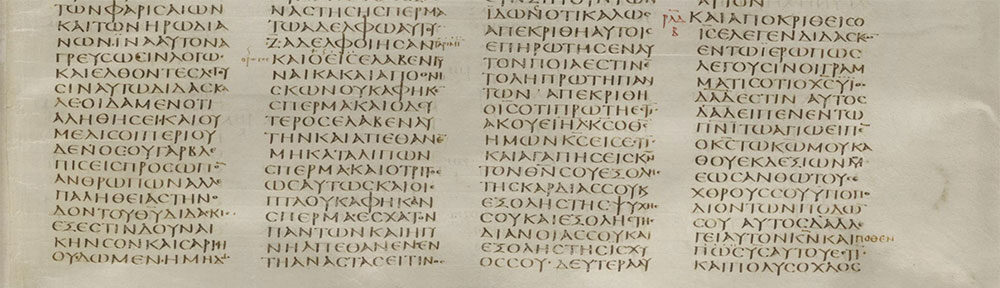
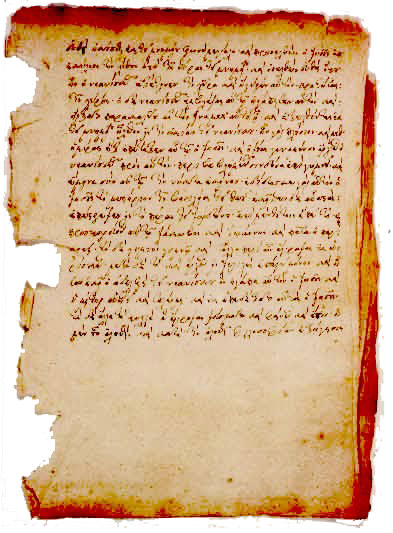
 A couple of my buddies over at York University who study the appendix to the Bible (I think it’s called the New Testament :-)) also study some obscure stuff relating to the appendix (called the “Christian Apocrypha”). At any rate, they (I guess I can name them: Tony Burke and Phil Harland) are hosting a conference on the Secret Gospel of Mark at the end of April, 2011 at York University.
The conference, Ancient Gospel or Modern Forgery? The Secret Gospel of Mark in Debate, is the first of the York University Christian Apocrypha Symposium Series. More details may be found here.
If you are wondering what the “Secret Gospel of Mark” is, here is an excerpt from the conference website:
In 1958, American Biblical scholar Morton Smith made an astounding discovery in the Mar Saba monastery in Jerusalem. Copied into the back of a 17th century book was a lost letter by Clement of Alexandria (ca. 150-215 CE) containing excerpts from a longer version of the Gospel of Mark. This Secret Gospel of Mark, as it became known, is now one of the most debated texts of the Christian Apocrypha. More than fifty years after its discovery, there is still no consensus on the issues of its authenticity. Was the letter truly written by Clement of Alexandria? Or by a medieval or even modern forger? Was the forger Morton Smith himself? The debate has heated up in recent years with the publication of Stephen Carlson’s The Gospel Hoax: Morton Smith’s Invention of Secret Mark (Waco, TX: Baylor, 2005) and several criticisms of Carlson’s work by other scholars. Unfortunately, there has been no effective venue for these scholars to share their views on the text and arrive closer to a resolution of the issue of its authenticity. It is hoped that some progress can be made by bringing these scholars together to present their latest work on the gospel to each other, to an audience of interested scholars, to a curious public, and ultimately to an even wider audience with the publication of the papers and summaries of the discussion that arises from their gathering.
(Stephen Carlson, author of The Gospel Hoax, blogs over at hypotyposeis, often on Secret Mark)
I encourage you to check the conference out!
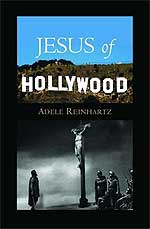 I just received my copy of Adele Reinhartz’s new book,
  The first section ends with a chapter dealing with the thorny issue of the relationship of Jesus films — and the gospels they are ostensibly based on — to history. Here Reinhartz’s background as a biblical scholar comes to the fore. While many filmmakers have claimed to present the “reel” Jesus in their films, i.e., a Jesus who is faithful to both the Scriptures and history, Reinhartz questions these claims. She deals deftly with the complicated question of the relationship of the gospels to history and how screenwriters have negotiated between the divergent portrayals of Jesus in the four gospels., focusing on the iconoclastic films
  Monday evening (29 May 2006) there was a special joint lecture sponsored in part by the CSBS by Bart Ehrman entitled “The Alternative Vision of the Gospel of Judas.â€?
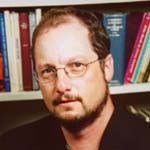 Ehrman’s lecture focused on uncovering the significance of the “Gospel of Judas,” the recently uncovered second-century gnostic gospel that has been all the rage in recent months. In a nutshell, the significance of this gospel text, according to Ehrman, is not because it is somehow more authentic than the canonical gospels or because it somehow undermines the very foundations of Christianity. Rather, its real significance is because it is a serious document of real historical significance which gives us a glimpse into gnostic thinking in antiquity. According to Ehrman, the text’s closest ties are with various Sethian forms of Gnosticism, although it has clear alliances with other forms of early Christian thought (Valentinian, Thomasine, Marcionite). He even argued that there appears to be remnants of Jewish apocalyptic theology in the surviving text. He also noted how it has some unique characteristics compared to other gnostic texts, such as the sympathetic portrayal of Judas as the only disciple who really understood Jesus’ work and message (sounds like The Last Temptation of Christ). The lecture was well done, although considering his audience was mainly academics, he could have raised the level of the lecture a bit.