
[I post a lot about Old Testament/Hebrew Bible on this blog. This post explores one of the perennial problem passages in the early chapters of Genesis. Originally posted 03/2009]
One of the many crux interpretums in the early chapters of the Book of Genesis surrounds Yahweh’s negative response to Cain’s offering. Why did Yahweh accept Abel’s offering and reject Cain’s? Some traditional — yet ultimately unsatisfying — answers include that God prefers animal sacrifices over grain offerings or that God prefers shepherds to farmers. Others have chalked it up to the mystery of Divine election. The New Testament author of Hebrews interprets Yahweh’s disapproval as a matter of faith: “By faith Abel offered to God a more acceptable sacrifice than Cain’s” (Heb 11:4).
The passage in Hebrew MT is as follows:
וַיְהִי־הֶבֶל רֹעֵה צֹאן וְקַיִן הָיָה עֹבֵד אֲדָמָה
וַיְהִי מִקֵּץ יָמִים וַיָּבֵא קַיִן מִפְּרִי הָאֲדָמָה מִנְחָה לַיהוָה
וְהֶבֶל הֵבִיא גַם־הוּא מִבְּכֹרוֹת צֹאנוֹ וּמֵחֶלְבֵהֶן
וַיִּשַׁע יְהוָה אֶל־הֶבֶל וְאֶל־מִנְחָתוו
וְאֶל־קַיִן וְאֶל־מִנְחָתוֹ לֹא שָׁעָה
While the biblical text does not indicate explicitly why Yahweh approved of Abel’s offering and disapproved of Cain’s, I wonder if it gives us a hint based upon an under appreciated nuance of Hebrew grammar: the anterior construction. I made reference to Ziony Zevit’s volume, The Anterior Construction in Classical Hebrew (Scholar’s Press, 1998; buy from Amazon.ca | Amazon.com), in a comment on a previous post. Zevit argues that when biblical authors wanted to indicate unambiguously that a given action in the past had commenced and concluded before another action in the past (a pluperfect) or had started but not necessarily finished in the past prior to the beginning of another action (preperfect), they would use the following construction: vav + subject followed by a qatal verb (all preceded a past tense verb). Taking this construction into consideration, here is my translation of the Cain and Abel passage:
Now Abel was a keeper of sheep,
but Cain had been a worker of the ground.
And after many days, Cain brought to Yahweh a gift from the fruit of the ground,
But Abel, he had already brought from the first born of his flock, their fat portions.
Now Yahweh looked with favour to Abel and to his gift,
but to Cain, and to his gift, he did not look with favour.
The use of the anterior construction (indicated by italics) emphasizes that while Cain had started being a worker of the ground before Abel took up his farming (which would have been expected as the older brother), Abel was the first to bring a gift to Yahweh from the fruit of his labours. Moreover, the parallel construction of these verses (as a chiasm, in fact) sets up a clear contrast between the gifts: Cain only brought from the fruit of the ground, while Abel brought the fat portions from the first born of his flock. While we shouldn’t read later sacrificial law back into this account, the fact that Abel’s gift receives additional descriptors suggests that he offered the first and the best.
So while the biblical text doesn’t spell out exactly why Yahweh favoured Abel’s gift, it seems clear from the grammar and syntax of the passage that not only did Abel beat his brother by bringing a gift to Yahweh before him (even though Cain started his career first), he also offered the first and the best of his flock to Yahweh. Perhaps that is why Yahweh looked with favour on Abel’s offering. This understanding comports well with interpretations that suggest the individual’s attitude (or faith) was the reason for Yahweh’s response. In fact, it provides some evidence within the text itself for the difference in attitudes between the brothers.
At any rate, I don’t have time to explore the pros and cons of the anterior construction (it makes some assumptions of the nature of the Hebrew verbal system), but thought I would highlight this one potential way it can shed some light on a difficult passage.
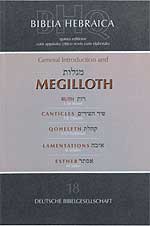 In the Hebrew Bible section I have now included Biblia Hebraica Quinta project. As most of my readers are probably aware, BHQ is the new critical edition of the Hebrew Bible that is being produced under the auspices of the United Bible Societies. It follows in the tradition of BHS and BHK before it, with some exceptions. One change in approach that I am not entirely in favour of is the new policy against conjectural emmendations (i.e., a proposed reading that does not have external textual support, but does have intrinsic probability). While I am not a big fan of conjectural emendations (although I have always found the plethora suggested by Driver to be at the very least entertaining), they have a place in the practice of textual criticism. There are some places in the Hebrew Bible where the MT doesn’t make sense and other texts do not help. This is when a good text critic will suggest an emendation. At any rate, there are currently three fascicles available:
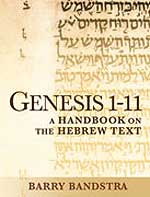 A new series of reading guides to the Hebrew text that deserves highlighting is The Baylor Handbook on the Hebrew Bible series. This series guides the reader through individual books of the Hebrew Bible (or significant sections thereof) underscoring its grammatical and syntactic features, typically with reference to modern linguistic approaches. There are currently three volumes available:
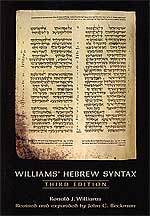 Finally, one other grammar I want to highlight is John C. Beckman’s thorough revision and expansion of R.J. William’s Hebrew Syntax: An Outline.
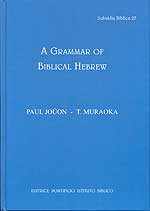 On related note, I just received my copy of the new edition of Paul Joüon and Takamitsu Muraoka, A Grammar of Biblical Hebrew (Revised English edition; 1 vol.; Subsidia Biblica 27; Pontifical Institute, 2006; Buy from