Mazar’s Jerusalem Excavation in the News (with Photos)

There is a pretty good article on Eilat Mazar’s Jerusalem excavation by The Washington Post writer Scott Wilson (also see here).

The article didn’t say much new (see my previous coverage here, as well as information on the seal discovered in the excavation here), but did have some excellent pictures accompanying it:

Jesus Junk and Christian Kitsch 4.1 – Special Edition: Bible-Inspired Erotic Calendar!?

OK, being seeker-friendly is one thing, but this is another! Reuters has a story about a German youth group which has produced a 2006 calendar with Bible-inspired erotic images. The images include a bare-breasted Delilah cutting Samson’s hair, a nude Eve offering an apple, Lot’s wife and daughters (!), Bathsheba in her bath, Salome’s dance, as well as some how I am not sure how they could be erotic, such as Jesus’ baptism and the near sacrifice of Isaac. The project is explained online here.

Minor Clarification regarding Hanan Eshel

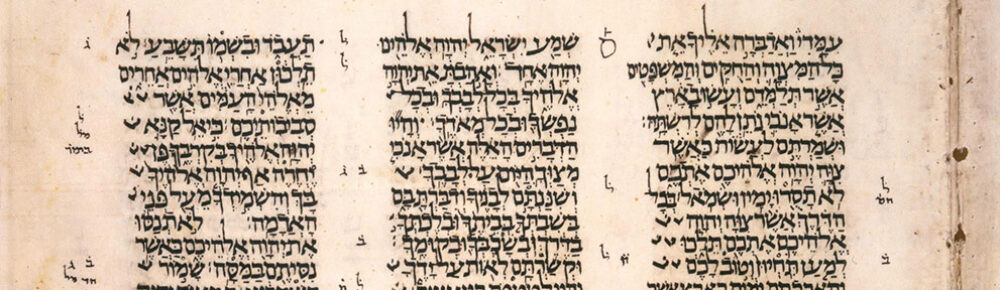
I have covered much of the news surrounding Hanan Eshel’s recovery of some scroll fragments of the book of Leviticus (see here) as well as the subsequent investigation into his involvement the purchase (see here and here).

I wanted to clarify that no charges were ever laid against Hanan Eshel, although some news reports suggested otherwise. The reason why Hanan was not able to make it to SBL had nothing to do with the controversy. Hanan had his passport back and a visa was arranged for SBL, though there were some irregularities with his passport and he was advised against traveling.

Petition/Advertisement regarding the Treatment of Prof. Hanan Eshel

As many of my readers would be aware, I have tried to cover the events surrounding Prof. Hanan Eshel’s recovery of some ancient scroll fragments of the book of Leviticus (for more on the Leviticus fragments see my coverage here).

Eshel’s actions (purchasing the fragments from the bedouin, among other things) led to an investigation by the Israel Antiquities Authority, inlcuding the detention of Hanan Eshel (see my post on the investigation here). After the investigation he was released with all charges dropped.

From the very beginning of this issue — and especially after my interview with Hanan Eshel — I have supported his actions in this matter. Obviously the ideal situation would be to discover ancient artefacts in controlled archaeological digs, this doesn’t always happen. What is most important is that through his actions Hanan was able to preserve the scroll fragments.

As a protest to the way Hanan was treated, a number of scholars placed an advertisement in the Hebrew news paper Haaretz on Friday 18 November 2005. A scan of the Hebrew ad is available here. Below is an English translation of the ad, courtesy of Robert Deutsch via the ANE email list.

The subject:
The proceedings of the Israel Antiquities Authority (IAA) (i.e. Shuka Dorfman) regarding Prof. Eshel’s Affair

We, archaeologists, historians and researchers in other fields of Humanities, wish to express our protest regarding the actions taken by the IAA against Prof. Eshel. Hanan Eshel and his student, Roy Porat, purchased a scroll fragment from a Bedouin and handed it over to IAA. About this fact there is no dispute. Therefore, blaming the teacher and his student of (illegal) trade with antiquities, is absurd. The police months lasting investigation, search in Eshel’s house, confiscating his passport, delivering misleading statements to the press, and sending TV crews in order to record him leaving the police headquarter – is intolerant. We are convinced that Eshel rescued the scroll fragment, which could otherwise be lost. His treatment as an average criminal is a vengeful act, not wise, unfair, and an unparalleled public institution attitude toward a scientist.

Joseph Aviram – Israel Exploration Society, Jerusalem
Prof. Edna Ulman-Margalit – The Center for Rationalism, Hebrew University, Jerusalem
Prof. Shmuel Ahituv – Bible, Ben Gurion University, Beer Sheba (Emeritus)
Prof. David Ussishkin, Archaeology, Tel Aviv University (Emeritus)
Prof. Eliezer Oren – Archaeology, Ben Gurion University, Beer Sheba (Emeritus)
Dr. Eithan Ayalon, Eretz Israel Museum, Tel Aviv
Prof. Miriam Rosen-Ayalon, – Archaeology, Hebrew University, Jerusalem (Emeritus)
Prof. Israel Ephal – History of the Jewish People, Hebrew University, Jerusalem
Prof. Albert Baumgarten – History of the Jewish People, Bar Ilan University, Ramat-Gan
Dr. Adrian Boaz – Archaeology’ University of Haifa
Prof. Anna Balfour-Cohen – Archaeology, Hebrew University, Jerusalem
Prof. Jehoshua Ben-Arie – Geography, Hebrew University, Jerusalem (Emeritus)
Prof. Amnon Ben-Tor, – Archaeology, Hebrew University, Jerusalem (Emeritus)
Dr. Dafna Ben-Tor, – Archaeology, Israel Museum, Jerusalem
Prof. Dan Barag, – Archaeology, Hebrew University, Jerusalem
Na’ama Brosh – Israel Museum, Jerusalem
Magen Broshi – The Shrine of the Book, Israel Museum, Jerusalem (Pensioner)
Prof. Menahem Brinker – Philosophy, Hebrew literature, Hebrew University, Jerusalem
Prof. Bezalel Bar-Kokhba – History of the Jewish People, Tel aviv University
Prof. Moshe Bernstein – Bible, Yeshiva University, New York
Hillel Geva – Israel Exploration Society, Jerusalem
Prof. Ram Gophna, Archaeology, Tel Aviv University (Emeritus)
Haim Gitler, Israel Museum, Jerusalem
Prof. Johanan Gluker, Classic Studies, Tel Aviv University
Prof. Trude Dothan, – Archaeology, Hebrew University, Jerusalem (Emeritus)
Michal Dayagi-Mendels, Archaeology, Israel Museum, Jerusalem
Prof. Shimon Dar – History of the Jewish People, Bar Ilan University, Ramat-Gan
Dr. Ruth Ha-Cohen-Pinchover, Musicology, Hebrew University, Jerusalem
Prof. Beth Halperin – Theology, Vassar College, USA (Emeritus)
Malka Hershcowitz – Hebrew Union College, Jerusalem
Uzza Zevulun – Eretz Israel Museum, Tel Aviv (Pensioner)
Dr. Ester Hazon – Orion Center, Hebrew University, Jerusalem
Yael Israeli – Archaeology, Israel Museum, Jerusalem (Pensioner)
Prof. Moshe Kochavi – Archaeology, Tel Aviv University (Emeritus)
Prof. Israel Levin, – Archaeology, Hebrew University, Jerusalem
Prof. Aren Maeir – History of the Jewish People, Bar Ilan University, Ramat-Gan
David Mevorach – Archaeology, Israel Museum, Jerusalem
Prof. Judy Magness – Archaeology, North Carolina University, USA
Prof. Amihai Mazar – Archaeology, Hebrew University, Jerusalem
Prof. Pinchas Mendel – Hebrew literature, University of Haifa
Dr. Zeev Meshel – Archaeology, Tel Aviv University (Emeritus)
Prof. Nadav Naaman – History of the Jewish People, Tel Aviv University
Prof. Michael Stone – Theology, Hebrew University, Jerusalem
Prof. Daniel Sivan – Hebrew Language, Ben Gurion University, Beer Sheba
Prof. Zeev Safrai – History of the Jewish People, Bar Ilan University, Ramat-Gan
Prof. Israel Finkelstein – Archaeology, Tel Aviv University
Dr. Irit Ziffer – Archaeology, Tel Aviv University
Prof. Elisha Kimron – Hebrew Language, Ben Gurion University, Beer Sheba
Prof. Frank More Cross- Semitic Languages, Harward University, USA (Emeritus)
Dr. Silvia Rosenberg – Archaeology, Israel Museum, Jerusalem
Prof. Abraham Ronen – Archaeology, University of Haifa
Prof. Alexander Rofe – Bible, Hebrew University, Jerusalem
Prof. Ronny Reich – Archaeology, University of Haifa
Prof. Elhanan Reiner – History of the Jewish People, Tel Aviv University
Guy Stibel – Archaeology, Hebrew University, Jerusalem
Prof. Daniel Scwartz – History of the Jewish People, Hebrew University, Jerusalem
Prof. Laurence Shifman – Hebrew and Judaism, University of New York
Dr. Ilan Sharon – Archaeology, Hebrew University, Jerusalem
SBL Round-Up

OK, so I wasn’t at the Society of Biblical Literature meetings in Philadelphia the last few days — but due to the excellent posts by my fellow bibliobloggers, I feel like I was there! (Truth be told, I REALLY regret not going to SBL this year. It sounds as if it was a good meeting and it especially would have been great to meet other bibliobloggers.)

A number of bibliobloggers have posted their musings on the SBL. See, for example, Christopher Heard’s Friday, Saturday, and Sunday updates, Mark Goodacre’s daily posts (Saturday am/pm, Sunday am/pm, Monday am/pm), as well as Jim West’s numerous posts.

Sessions I Would Have Liked to Attend

CARG Biblioblogging Session. From the papers that were posted earlier (see Jim Davila’s paper here; R.W. Brannan’s paper is here), this session had the potential to be quite interesting — and it sounds like it was. I’m not sure if much was accomplished in regards to setting the future of biblioblogging, but it provided a venue for everyone to meet face to face. For impression of how the session went, see Christopher Heard’s thoughts here, Joe Cathey has posted his impression on meeting various individuals as well as some reflections on the session. Torrey Seland also has posted his reflections here; he also had an excellent pre-SBL post about biblioblogs here. There are also some reflections by AKM Adam and Jim West. I personally find the whole “biblioblog” phenomenon great. I have really enjoyed blogging — I have learned a lot by writing my own posts and reading others. I also think the variety among biblioblogs is great and should be encouraged.

Tel Zayit Abecedary Session. From the number of posts, this session seems to have been one of the more interesting to attend. Even prior to the SBL, Paul Nikkel posted a summary of the presentation on the Tel Zayit inscription at the ASOR meetings (as well as the Tell es-Safi inscription here). Make sure to check out Michael Homan’s interesting firsthand account of the discovery here. Christopher Heard has a number of excellent posts on the abecedary (here and in response to Joe Cathey here), as does Joe Cathey (here and in response to Chris here) and, of course, Jim West’s post may be found here. Joe sees the cup half full and perhaps assumes too much, while Jim sees the glass half empty and questions whether the inscription can bear the conclusions drawn from it. Chris brings his characteristic level head to the discussion and cautions about seeing too much significance vis-a-vis maximalist-minimalist historical questions, though its paleographical significance is immense. Jim Davila also has a superb four-part discussion of the inscription (Parts 1, 2, 3, and 4; for a more general SBL report from Jim see here). His final conclusion concerning the inscription is so good I just have to quote it in full:

So what does it all mean? I’m tempted to picture the final exam for scribes: the candidates walk in and sit down. At each desk there is a forty pound stone. The instructor says, “Now incise the alphabet on this stone with your metal tool. You have 50 minutes.” Unfortunately, our scribe made several mistakes and flunked out. His final exam was posted on the wall as a warning to other students. Don’t let this happen to you.

New Historicism and the Hebrew Bible. This entire session looked interesting, but in particular Jim West notes a paper by Sean Burt (Duke University) who offered a critique of Long, Longman, and Provan’s A Biblical History of Israel. Jim argues that Burt rightly pointed out that “those who privilege the Hebrew Bible as a source should also explain why Jubilees and The Samaritan Chronicles are not.” He further notes that “the ‘maximalists’ owe it to us all to explain why and how they justify their exclusive use of the Hebrew Bible as their only source. Why not use Josephus or Philo instead?” Of course, the simple answer to Jim’s question is that Long, Longman, and Provan limited their sources to the Hebrew Bible because they were writing a “Biblical” History of Israel (note the title of their book!). But, that answer would be too simple. In my humble opinion I would agree with Jim insofar as I think that all potential sources should be evaluated and used when appropriate. In regards to Josephus, they do in fact use him a bit in their work, but I’m not sure why one would use Josephus instead of the Hebrew Bible — especially since Josephus is clearly later and derivative of the Hebrew Bible. That being said, Josephus may preserve some valuable historiographic information. From the online abstract Burt’s paper looked quite interesting in that it explore the ideological nature of historiography.

All in all it looked as if SBL was quite interesting. Of course, what I find most valuable about SBL is not the papers; I find that getting together with old friends and meeting new ones the most enjoyable thing about SBL (and, of course, the book displays!).

Next year in Washington, D.C.