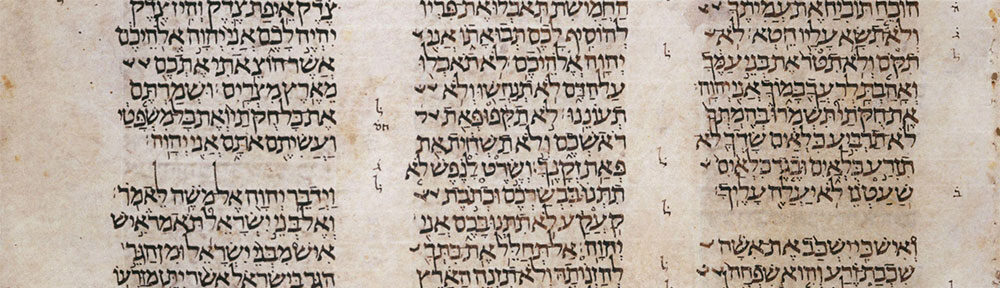
This massive tome on Psalms scholarship has recently come into my possession:
Peter W. Flint and Patrick D. Miller, eds., with the assistance of A. Brunell and R. Roberts, The Book of Psalms: Composition and Reception (Vetus Testamentum Supplements 99; Formation and Interpretation of Old Testament Literature 4; Leiden/Boston: Brill Academic Publishers, 2005). Pp. xx + 680. Cloth, 179.00, US$241.00. ISBN: 90 04 13642 8. Buy from Amazon.ca | Buy from Amazon.com
While I will be writing a review of this work for the Journal of Hebrew Scriptures, I thought I would preview it here first to whet your appetites (and give you time to save your money so you can afford to purchase it!).
This volume, edited by Peter Flint and Patrick Miller, is the most recent in the “Formation and Interpretation of Old Testament Literature” series produced by Brill. This series examines the prehistory, contents, themes, reception and interpretation of select books of the Hebrew Bible. Much in this volume does just that, though perhaps the most glaring omission that I noticed as soon as I perused the table of contents is the complete lack of any chapter on the Dead Sea Scrolls (there are, however, two chapters on the Psalms in the Syriac tradition!). I personally do not understand how a volume on the composition and reception of the Psalter can not have a chapter devoted to the significance of the so-called Qumran Psalms Scroll (11QPs-a). This lacuna is all the more obvious considering that one of the editors of the volume is Peter Flint!
This volume contains a number of excellent essays on various aspects of Psalms scholarship, many by seasoned Psalms scholars like Broyles, Brueggemann, Gerstenberger, Koch, McCann, Seybold, Wilson, and Zenger.
The volume is divided into five major sections. Here is a listing of the esays:
Part One: General Topics
Klaus Koch, “Königspsalmen und ihr ritueller. Hintergrund: Erwägungen zu Ps 89, 20–38 and Ps 20 und ihrer Vorstufen” (9-52); Rolf Rendtorff, “The Psalms of David: David in the Psalms” (53-64).
Part Two: Commentary on or Interpretation of Specific Psalms
Adele Berlin, “Psalms and the Literature of Exile: Psalms 137, 44, 69, and 78” (65-86); David Noel Freedman and David Miano, “Non-Acrostic Alphabetic Psalms” (87-96); J. J. M. Roberts, “Mowinckel’s Enthronement Festival: A Review” (97-115); Beat Weber, “Zum sogennanten “Stimmungsumschwung” in Psalm 13″ (116-138); Nancy L. deClaissé-Walford, “An Intertextual Reading of Psalms 22, 23, and 24” (139-152); Dennis Pardee, “On Psalm 29: Structure and Meaning” (153-183); John S. Kselman, “Double Entendre in Psalm 59” (184-189); Richard J. Clifford, S.J., “Psalm 90: Wisdom Meditation or Communal Lament?” (190-205); Michael L. Barré, “The Shifting Focus of Psalm 101” (206-223); Sung-Hun Lee, “Lament and the Joy of Salvation in the Lament Psalms” (224-247); Craig C. Broyles, “Psalms Concerning the Liturgies of Temple Entry” (248-287); James W. Watts, “Biblical Psalms Outside the Psalter” (288-309).
Part Three: The Psalter as Book, Including Smaller Collections
Harry P. Nasuti, “The Interpretive Significance of Sequence and Selection in the Book of Psalms” (311-339); J. Clinton McCann, Jr., “The Shape of Book I of the Psalter and the Shape of Human Happiness” (340-348); Michael Goulder, “The Social Setting of Book II of the Psalter” (349-367); Klaus D. Seybold, “Zur Geschichte des vierten Davidpsalters (Pss 138-145)” (368-390); Gerald H. Wilson, “King, Messiah, and the Reign of God: Revisiting the Royal Psalms and the Shape of the Psalter” (391-406); Erich Zenger, “Theophanien des Königsgottes JHWH: Transformationen von Psalm 29 in den Teilkompositionen Ps 28-30 und Ps 93-100” (407-442).
Part Four: Textual History and Reception in Judaism and Christianity
Albert Pietersma, “Septuagintal Exegesis and the Superscriptions of the Greek Psalter” (443-475); Moshe Bernstein, “A Jewish Reading of Psalms: Some Observations on the Method of the Aramaic Targum” (476-504); Robert J. V. Hiebert, “The Place of the Syriac Versions in the Textual History of the Psalter” (505-536); Harry F. Van Rooy, “The Psalms in Early Syriac Tradition” (537-550); Craig A. Evans, “Praise and Prophecy in the Psalter and in the New Testament” (551-579).
Part Five: Theology of the Psalter
Walter Brueggemann, “The Psalms in Theological Use: On Incommensurability and Mutuality” (581-602); Erhard S. Gerstenberger, “Theologies in the Book of Psalms” (603-625).
The volume includes five helpful indices: Scripture, Apocrypha and Pseudepigrapha, Dead Sea Scrolls, Other Ancient Writings, and Modern Authors.
 This last Thursday I had the privilege of attending a retirement party for one of colleagues, Prof. Hans Peter Ristau. What was special about this event is that Prof. Ristau was not only my colleague, but also my former undergraduate professor and a big reason why I followed the career path I did.
 I have many fond memories of Prof. Ristau’s courses. His courses were challenging — especially for a generation raised on sound-bites and TV. His tests were fair, though comprehensive (I will forever remember Old Testament personalities such as Shamgar, Abishag, Ehud, Shear-Jashub, and many others). I particularly recall his overheads — they were literally filled with valuable data so there was hardly a space left blank with little or no margins. His courses were definitely not for the faint of heart and they developed quite the reputation. Significantly, in his courses I was introduced to some scholars who would be formative for my early understanding of the Bible such as Brevard S. Childs and John Goldingay.
 I went to see
  Mark Goodacre notes on his
  First, I have to say, I love my new Macintosh. Mac OS X (Tiger) is an elegant operating system and my dual processors are quite impressive on the speed side of things. That being said, I was surprised to hear that Apple is switching to Intel (OK, breathe deeply now).